没底 is short for "no bottom," meaning you have no idea what will happen. It is often used with 心里, as in 心里没底.
Related: 心里没谱、心里不踏实、没把握
More about this expression →

Do You Panic When Your Phone Hits 5%? Battery Anxiety and Getting Lost
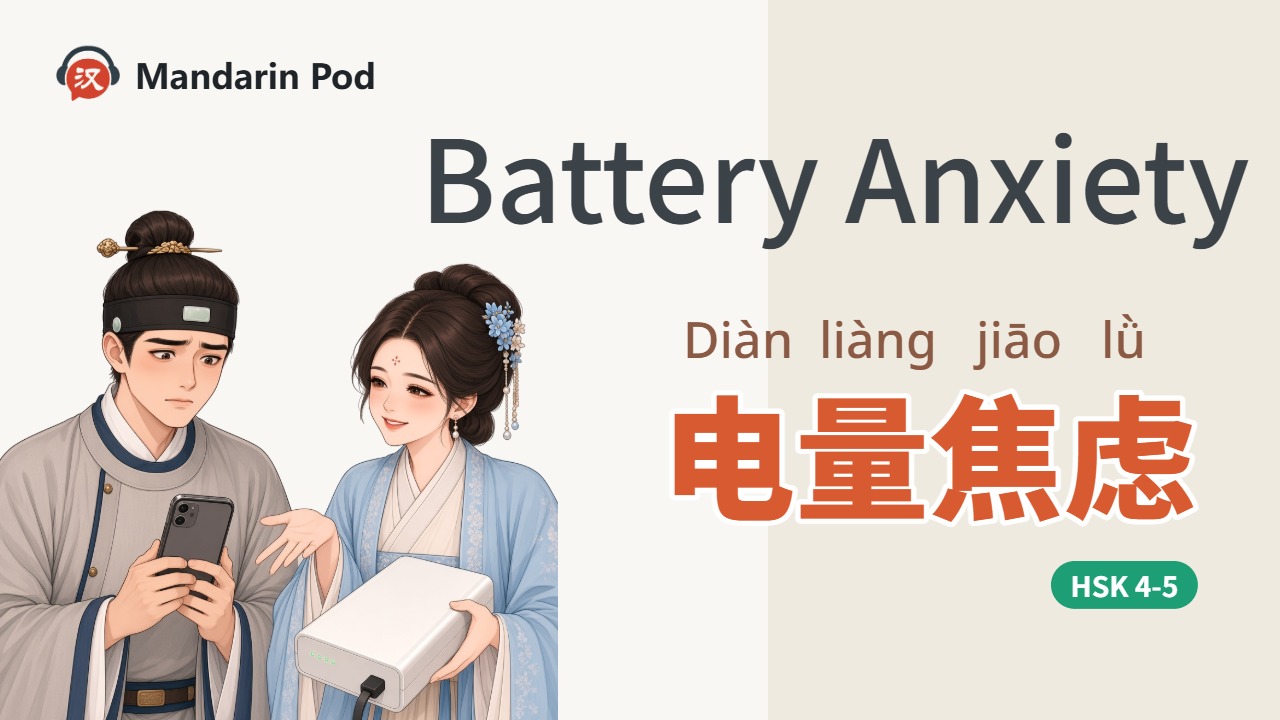
Do you panic when your phone is about to die? In this episode of Mandarinpod, Ma Li and Zhou Yang use simple, natural Chinese to talk about "battery anxiety" (电量焦虑). Zhou Yang always says he has a "great sense of direction" (方向感特别好), yet he ended up walking in a big circle beneath the Xi'an City Wall; Ma Li got lost in Chengdu and ended up buying a jin of tangerines while asking for directions. They also talk about their phones dying on the subway at night, suddenly losing contact with friends they were meeting up with, and what you can do to prepare before going somewhere unfamiliar. The episode is also full of practical Chinese for asking directions, such as "请问,去地铁站怎么走?" (Qǐngwèn, qù dìtiězhàn zěnme zǒu? – Excuse me, how do I get to the subway station?), "能不能帮我指一下?" (Néng bu néng bāng wǒ zhǐ yíxià? – Could you point the way for me?) and "请您说慢一点" (Qǐng nín shuō màn yìdiǎn – Please speak a little more slowly). It's great for intermediate learners who want to improve their Chinese listening and learn everyday spoken Chinese. Useful words: 电量焦虑 diànliàng jiāolǜ (battery anxiety); 方向感 fāngxiànggǎn (sense of direction); 省电模式 shěngdiàn móshì (power-saving mode); 迷路 mílù (to get lost); 充电宝 chōngdiànbǎo (power bank); 离线地图 líxiàn dìtú (offline map); 换乘 huànchéng (to transfer); 失联 shīlián (to lose contact); 心里没底 xīnli méi dǐ (to feel unsure). Have you ever had your phone die while you were out and couldn't find your way? Tell us about it in Chinese in the comments!
大家好,欢迎来到 Mandarinpod,我是马丽。
Hi everyone, welcome to Mandarinpod. I'm Ma Li.
大家好,我是周扬。对不起,今天我迟到了二十分钟,让你等了这么久。
Hi everyone, I'm Zhou Yang. Sorry, I was twenty minutes late today and kept you waiting so long.
没关系,不过你一般都很准时,今天发生什么事了?
That's okay, but you're usually really punctual. What happened today?
我出了地铁站,手机地图突然打不开了。我觉得自己方向感特别好,就决定走过来,结果先往左走了十分钟,又往右走回来十分钟。
When I came out of the subway station, my map app suddenly wouldn't open. I figured I have a great sense of direction, so I decided to walk here. I ended up walking left for ten minutes, then walking back to the right for another ten.
每次你说“我方向感特别好”,最后都会走错路。不过你的地图为什么会打不开呢?
Every time you say "I have a great sense of direction," you end up going the wrong way. But why wouldn't your map open?
因为我的手机只剩百分之五的电。我一紧张就打开了省电模式,地图一下子就卡住了。
Because my phone was down to five percent battery. I panicked and turned on power-saving mode, and the map just froze.
那今天的话题就很合适了:手机只剩百分之五的电,你会慌吗?
Well, that makes today's topic perfect: if your phone only has five percent battery left, do you panic?
今天早上我是真的慌了,在一个不认识的地方,心里特别没底。
This morning I really did panic. I was somewhere I didn't know, and I felt totally lost.
这种感觉现在有个说法,叫“电量焦虑”。在家里没电还好,在外面没电,问题就大了。
There's actually a term for that feeling now: "battery anxiety." Running out of battery at home is fine, but when you're out, it's a big problem.
我同意,特别是出门旅行的时候。在一个陌生的城市,手机就是你的地图和钱包。
I agree, especially when you're traveling. In an unfamiliar city, your phone is your map and your wallet.
手机还是你的相机呢。去旅行的时候,你觉得手机里最重要的是哪个应用?
And your camera, too. When you travel, which app on your phone do you think is the most important?
当然是地图。没有地图,我连酒店都回不去。
The map, of course. Without it, I couldn't even get back to my hotel.
我也觉得是地图。不过地图特别费电,用得越多,电掉得越快。
I'd say the map too. But maps really drain your battery. The more you use them, the faster your battery goes down.
所以每次旅行,我的电总是不够用。
That's why every time I travel, my battery never lasts.
我在成都就遇到过这种情况。去年秋天我一个人去成都玩。有一天下午,我在老街上一边看地图,一边拍照,一边发视频,电量很快就只剩百分之十二了。
That happened to me in Chengdu. Last fall I went to Chengdu on my own. One afternoon, I was on an old street looking at the map, taking photos, and posting videos all at the same time, and pretty soon my battery was down to twelve percent.
三件事一起做,电肯定用得特别快。那时候你离酒店远吗?
Doing three things at once, your battery's definitely going to drain fast. Were you far from your hotel then?
还有半个小时的路。我把路线截了图,可是截图不能告诉我现在在哪儿,我还是迷路了。最后我问了一个卖水果的阿姨,她不但给我指了路,还让我买了一斤橘子。
It was still a half-hour walk. I took a screenshot of the route, but a screenshot can't tell you where you are, so I still got lost. In the end I asked a lady selling fruit. Not only did she give me directions, she also got me to buy a jin of tangerines.
问一次路,买一斤橘子,我觉得这个交换挺公平的。
Ask for directions once, buy a jin of tangerines. Sounds like a pretty fair trade to me.
橘子特别甜。我一边走一边吃,突然觉得没电也没那么可怕,反而走得更慢、看得更多了。
The tangerines were really sweet. I ate them as I walked, and suddenly running out of battery didn't seem so scary. If anything, I walked slower and saw more.
我同意,慢慢走能看到更多东西。我在西安也没电过,那天晚上下了城墙,我就不知道东南西北了,可是我对自己说:“没关系,我方向感特别好。”
I agree, when you walk slowly you see more. My phone died in Xi'an once too. That night, after I came down from the city wall, I completely lost my bearings, but I told myself, "It's fine, I have a great sense of direction."
又是这句话。我已经能猜到结果了,你是不是又走错了?
That line again. I can already guess what happened. You went the wrong way again, didn't you?
猜对了。我走了四十分钟,路过同一家包子店两次,最后又回到了下城墙的地方。
You guessed it. I walked for forty minutes, passed the same baozi shop twice, and ended up right back where I'd come down from the wall.
哈哈,你绕了一个大圈。下次你说方向感好的时候,我一定要提醒你这件事。
Haha, you went in a big circle. Next time you say you have a good sense of direction, I'm definitely going to remind you of this.
你提醒我也没用,我每次都觉得这次一定不会错。
Reminding me won't help. Every time, I think this time I definitely won't get it wrong.
这就是问题,你太相信自己了。下次出门前,先看一眼地图吧。
That's the problem, you trust yourself too much. Next time, take a look at the map before you head out.
好吧,我认了。不过我觉得,最紧张的不是旅行,是晚上一个人坐地铁回家。
Okay, I admit it. But I think the most stressful thing isn't traveling. It's taking the subway home alone at night.
我同意,特别是已经很晚了,最后一班地铁快开了,心里会特别着急。
I agree, especially when it's already really late and the last train is about to leave. You get really anxious.
上个月我吃完饭已经十一点了,进地铁站时手机还有百分之八。我在地铁上看了十分钟电视剧,想查换乘站的时候,手机关机了。
Last month, it was already eleven by the time I finished dinner, and my phone had eight percent when I got into the station. I watched a TV show for ten minutes on the train, and when I wanted to check where to transfer, my phone died.
哈哈,你这是自己把电用完了。手机关机以后,你是怎么找到换乘站的?
Haha, so you used up the battery yourself. After your phone died, how did you find your transfer station?
我只能抬头看车厢里的线路图。我坐了那么多年地铁,第一次认真看那张图。
I had to look up at the route map in the train car. I've been riding the subway for so many years, and that was the first time I really looked at that map.
因为平时都是手机告诉你在哪儿下车。你看,其实不用手机也能回家,以前大家不都是这样坐地铁的吗?
Because normally your phone tells you where to get off. See, you can actually get home without a phone. Isn't that how everyone used to ride the subway?
话是这么说,可是出了地铁站又有新问题。我平时都扫码骑共享单车,那天只能走了二十五分钟回家,第二天腿都酸了。
That's true, but once I got out of the station, there was a new problem. I usually scan a code to ride a shared bike, but that day I had to walk home for twenty-five minutes. My legs were sore the next day.
这个教训挺有用的。那你现在坐地铁还看电视剧吗?
That's a pretty useful lesson. So do you still watch TV shows on the subway now?
不看了,最多听听音乐。听音乐用的电少多了。
Not anymore. At most I listen to some music. That uses way less battery.
这个习惯好。我晚上坐地铁,电不够就不玩手机。
That's a good habit. When I take the subway at night and my battery's low, I don't use my phone.
你总是比我多想一步,怪不得你很少迷路。
You always think one step ahead of me. No wonder you hardly ever get lost.
说到找路,我发现现在大家越来越少问路了。
Speaking of finding your way, I've noticed people ask for directions less and less these days.
是啊,有了手机地图,谁还问人呢?而且我有点不好意思问路,总觉得会打扰别人。
Yeah, with map apps, who asks people anymore? Plus I'm a bit shy about asking for directions. I always feel like I'm bothering people.
我以前也这样,后来发现大部分人都很愿意帮忙。有一次我问一个大爷去火车站坐几路车,他说:“坐十二路,坐五站,下车往前走,看到银行再往右拐。”说完还问我要不要写下来。
I used to be like that too, but then I found that most people are really happy to help. Once I asked an old man which bus to take to the train station, and he said, "Take the number 12, ride five stops, get off and walk straight, and turn right when you see the bank." Then he even asked if I wanted him to write it down.
哈哈,大爷比手机地图还认真,手机地图可不会问你记住了没有。
Haha, he was even more thorough than a map app. A map app definitely won't ask if you've got it memorized.
没错,他还告诉我哪一站人多。这些都是手机地图不会说的。
Exactly. He also told me which stops get crowded. Those are things a map app won't tell you.
我问路就没那么顺利。有一次我问一个小伙子地铁站怎么走,他马上用自己的手机帮我查路线,还让我拍张照片。可是我的手机没电,拍不了。
Asking for directions didn't go so smoothly for me. Once I asked a young guy how to get to the subway station. He immediately looked up the route on his own phone and told me to take a picture of it. But my phone was dead, so I couldn't.
哈哈,他太着急帮忙,忘了你为什么问路了。那最后你找到地铁站了吗?
Haha, he was so eager to help that he forgot why you were asking in the first place. So did you find the subway station in the end?
找到了,他干脆带我走到了地铁站门口。那天我发现,问路其实也是跟别人说话的机会。
I did. He just walked me right to the station entrance. That day I realized asking for directions is also a chance to talk to people.
说得对,平时大家都低头看手机,很少跟陌生人聊天。而且问路能用到很多有用的中文。
That's true. Usually everyone's looking down at their phones and rarely chats with strangers. And asking for directions lets you use a lot of useful Chinese.
比如“请问,去地铁站怎么走?”“往哪边拐?”“远不远?”学中文的朋友可以记下来,一定用得上。
Like "Excuse me, how do I get to the subway station?" "Which way do I turn?" "Is it far?" If you're learning Chinese, write these down. They'll definitely come in handy.
还可以说“能不能帮我指一下”。问完别人以后,别忘了说一句“谢谢您”。
You can also say "Could you point me in the right direction?" And after you ask someone, don't forget to say "Thank you" using "nín."
对,说“您”会更有礼貌,特别是跟年纪大的人说话的时候。
Right, saying "nín" is more polite, especially when you're talking to older people.
如果听不懂,可以说“请您说慢一点”,大部分人都会很耐心。
If you don't understand, you can say "Could you please speak a little slower?" Most people will be really patient.
这句话太有用了。我刚来北京的时候,也常常请别人说慢一点。
That one's super useful. When I first came to Beijing, I often asked people to speak more slowly too.
还有一种情况我觉得特别麻烦,就是约了朋友见面,手机突然关机了。
There's another situation I find really annoying: you've arranged to meet a friend, and your phone suddenly dies.
我就遇到过。去年我跟大学同学约在商场门口,我刚发了“我到门口了”,手机就关机了。他在北门,我在南门,我们俩都等了二十分钟。
That's happened to me. Last year I arranged to meet a college classmate at the entrance of a mall. I'd just sent "I'm at the entrance" when my phone died. He was at the north entrance, I was at the south entrance, and we both waited for twenty minutes.
这下麻烦了,你们俩都联系不上对方。最后是怎么找到的?
Now that's a problem. Neither of you could reach the other. How did you find each other in the end?
我请商场服务台帮我广播:“请某某先生到一楼服务台,您的朋友在等您。”他听到以后,笑着跑过来了。
I asked the mall's information desk to make an announcement: "Would Mr. So-and-so please come to the first-floor information desk? Your friend is waiting for you." When he heard it, he came running over, laughing.
哈哈,这个办法真聪明,不过我觉得他会一直记得这件事。
Haha, that's really clever. But I bet he'll never let you forget it.
你说对了。他现在每次见我,第一句话就是:“这次约在哪个门?”
You're right. Now every time he sees me, the first thing he says is, "So which entrance are we meeting at this time?"
这已经变成你们俩的笑话了。我上学的时候没有手机,约见面都说得很清楚,几点、在哪儿。
It's become a running joke between you two. When I was in school, we didn't have phones, so when we arranged to meet, we were really clear about when and where.
对,现在因为有手机,大家就说“到了再联系”。可是手机一没电,就联系不上了。
Right. Now because we have phones, everyone just says "I'll message you when I get there." But once your phone dies, you can't reach anyone.
所以我现在约见面,一定说一个很具体的地方,比如“地铁站二号出口,那个大广告牌下面”。
So now when I arrange to meet someone, I always name a very specific spot, like "Exit 2 of the subway station, under that big billboard."
这个办法好,就算失联了,也能找到人。我以后也要这样说,不再说“商场门口”了。
That's a good idea. Even if you lose contact, you can still find each other. I'm going to do that from now on instead of just saying "the mall entrance."
还可以约好,十分钟还没见到,就去旁边的咖啡店等。
You can also agree that if you haven't found each other in ten minutes, you'll go wait at the coffee shop nearby.
这个主意不错,有一个备用的地方,心里就不慌了。
That's a good idea. If you have a backup spot, you won't panic.
对,心里不慌,就不容易出错。那我们聊聊,去不熟悉的地方,可以做哪些准备?
Right. When you don't panic, you're less likely to mess up. So let's talk about it: when you go somewhere unfamiliar, how can you prepare?
第一,出门前把手机充满电。这句话听起来简单,可是我常常做不到。
First, fully charge your phone before you leave. That sounds simple, but I often don't manage it.
第二,带一个充电宝和一根充电线,就算忘了充电也不怕。
Second, bring a power bank and a charging cable, so even if you forget to charge, you're fine.
第三,提前下载离线地图,没有网也能看,还比较省电。这个我用过,确实很方便。
Third, download offline maps ahead of time. You can use them without internet, and they save battery too. I've used them, and they're really convenient.
离线地图我也用过,在山里没有信号的时候特别有用。
I've used offline maps too. They're especially useful in the mountains when there's no signal.
对,而且它不用一直上网,电也掉得慢一点。
Yeah, and since they don't have to stay online the whole time, your battery drains a bit slower.
我还会把重要的地址写在纸条上,放在钱包里,比如酒店的名字和地址。
I also write important addresses on a slip of paper and keep it in my wallet, like the hotel's name and address.
写在纸上?现在什么都在手机里,这个办法听起来有点老。
On paper? Everything's on your phone these days. That sounds kind of old-fashioned.
老办法有时候最可靠。手机没电了,你把纸条拿给出租车司机看,他马上就知道去哪儿。
Sometimes the old ways are the most reliable. If your phone dies, you just show the slip of paper to a taxi driver, and he'll know right away where to go.
你说服我了。我觉得还有一点很重要,就是记住一个家人或者朋友的电话号码。
You've convinced me. I think there's one more important thing: memorize the phone number of a family member or friend.
对,现在很多人一个号码都记不住。手机关机了,借别人的手机,也不知道该打给谁。
Right. These days a lot of people can't remember a single number. If your phone dies and you borrow someone else's, you won't even know who to call.
说实话,我现在只记得我妈的号码,还有我自己的。
Honestly, the only numbers I remember now are my mom's and my own.
能记住你妈的号码已经不错了。
Remembering your mom's number is already pretty good.
那是因为我上学的时候天天给家里打电话,背了很多遍。
That's because when I was in school I called home every day, so I memorized it after dialing it so many times.
那我的号码呢?我们一起录了这么多期节目,你总该记得吧?
What about my number? We've recorded so many episodes together, you must remember it, right?
你的号码我只记得前面三个数字,后面的就想不起来了。
I only remember the first three digits of your number. I can't remember the rest.
哈哈,那你还是先把我的号码写在纸条上吧。你借过别人的手机打电话吗?
Haha, then you'd better write my number on a slip of paper first. Have you ever borrowed someone's phone to make a call?
借过一次,在火车站。我跟一个阿姨借手机给我妈打电话,她还说:“别着急,慢慢说。”
Once, at a train station. I borrowed a lady's phone to call my mom, and she even said, "Don't worry, take your time."
大家真的都很愿意帮忙。还有一个办法,就是出门前告诉家人你要去哪儿。
People really are so willing to help. Another thing you can do is tell your family where you're going before you head out.
这个我同意。就算手机没电,家人也知道你大概在哪儿,不会太担心。
I agree with that. Even if your phone dies, your family will roughly know where you are, so they won't worry too much.
我每次去旅行,都会把酒店的名字发给我妈。
Every time I travel, I send my mom the name of my hotel.
我也应该这样做,不然我妈又要打很多电话了。
I should do that too. Otherwise my mom will end up calling me a ton again.
好,我们来回答今天的问题。周扬,手机只剩百分之五的电,你会慌吗?
Okay, let's answer today's question. Zhou Yang, if your phone only has five percent battery left, do you panic?
我还是会慌,特别是在不认识的地方。但现在我会先停下来,看看周围有没有人可以帮忙。
I still panic, especially somewhere I don't know. But now I stop first and look around to see if there's anyone who can help.
这样很对,慌的时候走得越快,越容易走错。我在外面也会有一点慌,不过我知道还可以看路牌、开口问人。
That's exactly right. When you're panicking, the faster you walk, the more likely you are to go the wrong way. I get a little panicky when I'm out too, but I know I can still look at street signs and ask people.
而且没有手机的时候,我们反而会更认真地看看这个城市,就像你在成都吃着橘子慢慢走一样。
And when we don't have our phones, we actually take a closer look at the city, just like you walking slowly through Chengdu eating tangerines.
说得好。最后给大家留一个问题:你有没有在外面手机没电、找不到路的经历?你是怎么回去的?
Well said. Let's leave everyone with one last question: have you ever had your phone die while you were out and couldn't find your way? How did you get back?
欢迎在评论区用中文告诉我们。你可以说:“有一次我在地铁站手机没电了,我问了一位阿姨,她带我走到了出口。”
Tell us in Chinese in the comments. You could say, "Once my phone died at a subway station, so I asked a lady, and she walked me to the exit."
也可以说:“我从来没迷过路,因为我出门一定带充电宝。”
Or you could say, "I've never gotten lost, because I always bring a power bank when I go out."
不管是什么样的经历,我们都很想听一听。
Whatever your experience is, we'd love to hear it.
对,用中文写下来,也是很好的练习。
Right, and writing it down in Chinese is great practice too.
对了,马丽,录完节目我们去吃饭吧?附近有一家面馆特别好吃,走过去只要五分钟。
Oh, by the way, Ma Li, want to grab something to eat after we finish recording? There's a really good noodle place nearby, just a five-minute walk.
好啊。不过你知道那家面馆在哪儿吗?
Sure. But do you know where that noodle place is?
当然知道,就在这条街上。你放心,我方向感特别好。
Of course I do, it's right on this street. Don't worry, I have a great sense of direction.
你又说这句话了,我有点担心。你的手机现在还有多少电?
You said it again. Now I'm a little worried. How much battery does your phone have right now?
百分之二。不过五分钟的路,应该用不上手机吧。
Two percent. But it's a five-minute walk, so I shouldn't need my phone, right?
那还是我来看地图吧,我的手机还有百分之九十。今天你就跟着我走。
I'd better handle the map, then. My phone's still at ninety percent. Today, you just follow me.
好吧,今天我听你的。今天的节目就到这里,感谢大家收听 Mandarinpod。
Okay, today I'll do as you say. That's all for today's episode. Thanks for listening to Mandarinpod.
出门前记得看看电量,我们下期再见,拜拜!
Remember to check your battery before you head out. See you next time, bye!
拜拜!
Bye!
Finished listening? The hosts asked
Nǐ yǒu méiyǒu zài wàimiàn shǒujī méi diàn, zhǎobúdào lù de jīnglì? Nǐ shì zěnme huíqù de?
Have you ever had your phone die while you were out and couldn't find your way? How did you get back?
Read it first. Answer now, or come back after the steps below.
你有没有在外面手机没电、找不到路的经历?你是怎么回去的?
Nǐ yǒu méiyǒu zài wàimiàn shǒujī méi diàn, zhǎobúdào lù de jīnglì? Nǐ shì zěnme huíqù de?
Have you ever had your phone die while you were out and couldn't find your way? How did you get back?
Try to use two or three expressions from this episode to describe how you felt and who helped you.
Read each one and play the line it comes from.
没底 is short for "no bottom," meaning you have no idea what will happen. It is often used with 心里, as in 心里没底.
Related: 心里没谱、心里不踏实、没把握
More about this expression →Use 连 + noun + 都/也 + negative verb to stress that even the most basic thing is impossible.
Related: 连……都……、连……也……
More about this expression →Use 越A越B to show that one thing increases as another does. Here 得 links each verb to its degree.
Related: 越……越……、越来越
More about this expression →不但 is usually followed by 还 or 而且 in the next clause. 给某人指路 means to show someone the way.
Related: 不但……还……、不仅……而且……、给人指路
More about this expression →反而 introduces a result that is the opposite of what you would expect. Here it marks a surprisingly positive outcome.
Related: 反而、倒是、相反
More about this expression →Say 怪不得 when you suddenly understand the reason for something. 难怪 is a close synonym.
Related: 难怪、原来如此
More about this expression →Use it to partly agree with someone before adding a 'but.' It is usually followed by 可是 or 但是.
Related: 话虽如此、说是这么说
More about this expression →Verb + 不上 means you can't manage to do something. 联系不上 is very common when someone's phone is off.
Related: 联系不上、找不到人、失联
More about this expression →就算…也… means 'even if… still….' 失联 is a modern short form of 失去联系.
Related: 就算……也……、即使……也……、失去联系
More about this expression →用得上 means something will be useful. The negative form is 用不上, as in 应该用不上手机吧.
Related: 用得上、用不上、派上用场
More about this expression →Swap each word below into the sentence and say the new sentence out loud, or write it. Then check the answers. Can’t type Chinese? Here’s how
Replace the phrase to say 'no wonder' about a different situation.
怪不得你很少迷路
Replace the place to stress that you couldn't even get back there.
我连酒店都回不去
Replace the phrase to remind someone what to do before going out.
出门前记得看看电量